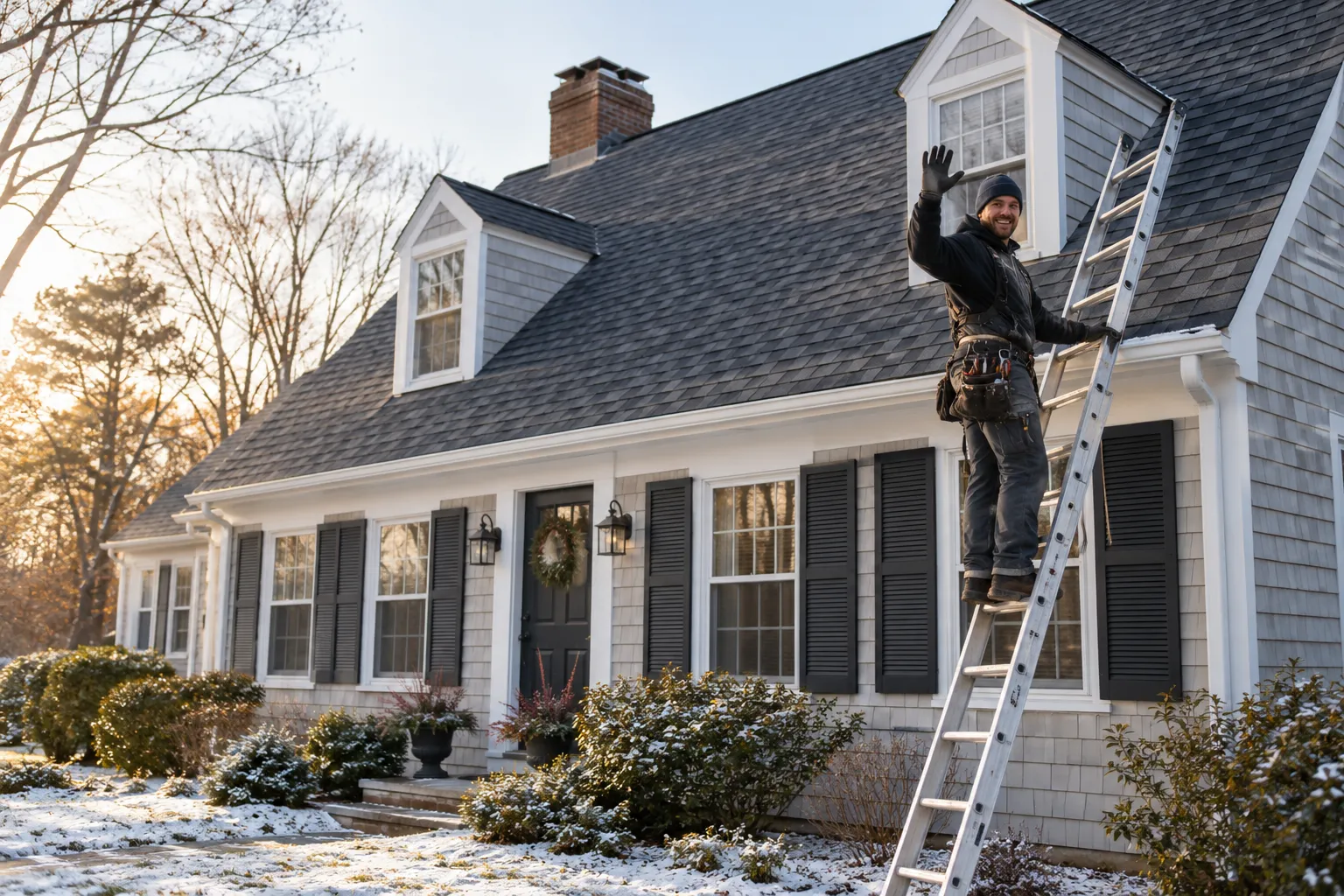
Is it safe to climb on my roof to check for damage?
Stay on the ground if you can. A roof is a lot like a steep slide, and wet shingles, frost or loose granules make slipping easy. Look from the yard or use binoculars. Watch for missing shingles, curled edges, sagging lines and stains on ceilings. Take photos as you go. If something looks wrong, a local provider in our network can inspect it safely and explain what they find.
Can I replace my roof myself to save money?
You can try, but it is a big job. Think of baking a wedding cake for the first time: one small mistake shows up later. A roof needs correct flashing, underlayment, ventilation and nailing. Errors can lead to leaks, ice dams or trouble with a material warranty. Many towns also require permits. Heavy bundles and steep pitches add real injury risk. Comparing written quotes helps you weigh the trade.
How much does a new roof cost?
In the U.S., asphalt shingle replacement often runs from about $6,000 to $15,000 or more, while metal or slate can cost much more. Size, pitch, layers to tear off, decking repairs and material all move the price. A Cape Cod style home with dormers may price differently than a simple gable. Treat any range as a rough guide, and ask each provider for a written quote that lists what is included.
Will homeowners insurance pay for a new roof?
Some policies may cover sudden damage, such as a fallen branch or a hail storm, while wear and age are often treated differently. Check your policy for deductibles and roof-age terms. Providers can often help document damage with photos and notes for a claim. The insurance company makes the final decision, not the provider or Crackpenalty Roofing, so read your policy and talk with your agent first.
Do I need emergency roof repair, or can I wait?
If water is coming in, protect your belongings first. Move items away and set out a bucket. A tarp may help for a short time, but do not climb up in bad weather. Request a callback to check provider availability for emergency roof repair or a replacement review. Slow, hidden leaks matter too. Like a small drip in a boat, they keep growing quietly.
How do I know if hail damage means a full replacement?
Hail leaves dents, bruised spots and bare patches where granules were knocked loose. A few marks may not mean much. Wide bruising across several slopes often points toward hail damage roof replacement. A roof is a coat, and a worn-through patch lets weather in. Ask providers to show photos and explain what they see before you decide.
How do I compare local roofing contractors?
Gather two or three written quotes and set them side by side. Check that each one lists materials, tear-off, disposal, ventilation and cleanup. Ask each provider about their own license and insurance in your state. Compare, then decide. A lower number is not always a smaller job, so look closely at what is actually included before choosing.
Does a cold, snowy climate change what roof I need?
Yes, it can. Freeze-thaw cycles push meltwater under shingles, and ice dams form where heat escapes from the attic. Older homes often have thin insulation and weak ventilation, so these matter as much as the shingles. Coastal storms add wind that tests every edge. Ask providers how they plan to handle ice protection and airflow on your home.